Buy porngold.eu ?
We are moving the project
porngold.eu .
Are you interested in purchasing the domain
porngold.eu ?
domain@kv-gmbh.de · 0541-91531010
Buy porngold.eu ?
What is the correct conjugation?
The correct conjugation of a verb depends on the subject of the sentence and the tense being used. In English, regular verbs typically follow a pattern of adding -ed to form the past tense (e.g., walk becomes walked). Irregular verbs, on the other hand, have unique conjugations that do not follow a set pattern (e.g., go becomes went). It is important to pay attention to the subject of the sentence and the tense being used in order to correctly conjugate a verb. **
What conjugation does "dare" have?
"Dare" is a regular verb in Italian and belongs to the second conjugation. In the present tense, it is conjugated as follows: io do, tu dai, lui/lei dà, noi diamo, voi date, loro danno. **


Similar search terms for Conjugation
Top-Angebote
Products related to Conjugation:
-
Oriflame Love Potion Sensual Ruby EDP W 50 mlOriflame Love Potion Sensual Ruby, 50 ml, Eaux de Parfum for Women, Treat your senses to a true gourmand experience. Oriflame Love Potion Sensual Ruby Eau de Parfum for women offers delicious notes that are nearly impossible to resist – especially if you love your sweets. gourmand fragrance floral fragrance brings out the sensuality in every woman suitable for everyday wear luxury fragrance for connoisseurs19,80 £*Shipping: 3,99 £Secure redirect to the provider
-
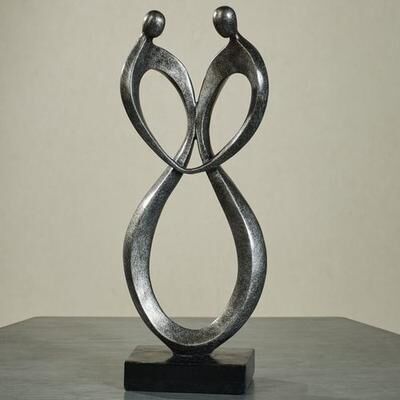
Touch of Class Passionate Dance Sculpture Silver , SilverWild and intense or slow and steady, a couple's life together can certainly be a Passionate Dance. With an abstract looped design, the silver resin sculpture resembles two people locked together atop a square base. Overall, the sculpture measures 6...79,00 $*Shipping: 15,95 $Secure redirect to the provider



-
What is conjugation in German?
Conjugation in German refers to the process of changing the form of a verb to match the subject of the sentence. This means that the verb will have different endings depending on whether the subject is "I," "you," "he/she/it," "we," or "they." Conjugation is an important aspect of German grammar as it helps to indicate who is performing the action in a sentence. It is essential for learners of German to understand how to conjugate verbs in order to communicate effectively in the language. **
-
How do I distinguish between the verbs of the E-conjugation and the consonant conjugation?
In Old Norse, the E-conjugation verbs typically end in -a in the infinitive form, while the consonant conjugation verbs end in -a, -i, or -u. Additionally, the E-conjugation verbs have a stem vowel that changes between the present and past tense, while the consonant conjugation verbs have a stem vowel that remains the same. It is also important to note that there are irregular verbs in both conjugations that do not follow these patterns. Therefore, it is important to study and memorize the specific conjugation patterns for each verb. **
-
What does the consonantal conjugation mean?
Consonantal conjugation is a grammatical feature found in Semitic languages, where the root of a verb consists of consonants only, and the vowels are added to indicate different tenses, moods, and aspects. This type of conjugation is characterized by changes in the vowels within the root consonants to convey different meanings. Consonantal conjugation allows for a high degree of flexibility and complexity in verb forms, making it a key feature of Semitic language grammar. **
-
What is the conjugation in German?
Conjugation in German refers to changing the form of a verb to match the subject of a sentence. This means adjusting the verb's ending based on the person (I, you, he/she/it, we, you all, they) and tense (present, past, future). German verbs can have different conjugations depending on these factors, making it important to learn the various verb forms to communicate accurately in the language. **

Is there a language without conjugation?
Yes, there are languages without conjugation. For example, Chinese is a language that does not have verb conjugation. In Chinese, verbs remain the same regardless of the subject or tense. Instead, time expressions or context are used to indicate when an action took place. **
What is the correct conjugation of "s'asseoir"?
The correct conjugation of "s'asseoir" in the present tense is as follows: - Je m'assois - Tu t'assois - Il/elle/on s'assoit - Nous nous asseyons - Vous vous asseyez - Ils/elles s'asseyent **
Top-Angebote
Products related to Conjugation:
-
Montale Sensual Instinct EDP U 50 mlMontale Sensual Instinct, 50 ml, Eaux de Parfum unisex, New day – new opportunity to tackle more challenges. Montale Sensual Instinct unisex Eau de Parfum will refresh your mind so that you can boldly follow your instinct. Embrace your everyday adventures! unique fragrance for a unique personality unisex – suitable for both women and men74,00 £*Shipping: 3,99 £Secure redirect to the provider
-
From You Flowers Flowers - Passionate PeachesA delicious bouquet with hues of pink, peach, and white with pops of green. The Peach Cobbler bouquet features peach roses, pink carnations, pink alstroemeria, and white lisianthus with floral greens. A beautiful and soft arrangement that loved ones...39,99 $*Shipping: 14,99 $Secure redirect to the provider
-
Oriflame Love Potion Sensual Ruby EDP W 50 mlOriflame Love Potion Sensual Ruby, 50 ml, Eaux de Parfum for Women, Treat your senses to a true gourmand experience. Oriflame Love Potion Sensual Ruby Eau de Parfum for women offers delicious notes that are nearly impossible to resist – especially if you love your sweets. gourmand fragrance floral fragrance brings out the sensuality in every woman suitable for everyday wear luxury fragrance for connoisseurs19,80 £*Shipping: 3,99 £Secure redirect to the provider
-
What is the correct conjugation?
The correct conjugation of a verb depends on the subject of the sentence and the tense being used. In English, regular verbs typically follow a pattern of adding -ed to form the past tense (e.g., walk becomes walked). Irregular verbs, on the other hand, have unique conjugations that do not follow a set pattern (e.g., go becomes went). It is important to pay attention to the subject of the sentence and the tense being used in order to correctly conjugate a verb. **
-
What conjugation does "dare" have?
"Dare" is a regular verb in Italian and belongs to the second conjugation. In the present tense, it is conjugated as follows: io do, tu dai, lui/lei dà, noi diamo, voi date, loro danno. **
-
What is conjugation in German?
Conjugation in German refers to the process of changing the form of a verb to match the subject of the sentence. This means that the verb will have different endings depending on whether the subject is "I," "you," "he/she/it," "we," or "they." Conjugation is an important aspect of German grammar as it helps to indicate who is performing the action in a sentence. It is essential for learners of German to understand how to conjugate verbs in order to communicate effectively in the language. **
-
How do I distinguish between the verbs of the E-conjugation and the consonant conjugation?
In Old Norse, the E-conjugation verbs typically end in -a in the infinitive form, while the consonant conjugation verbs end in -a, -i, or -u. Additionally, the E-conjugation verbs have a stem vowel that changes between the present and past tense, while the consonant conjugation verbs have a stem vowel that remains the same. It is also important to note that there are irregular verbs in both conjugations that do not follow these patterns. Therefore, it is important to study and memorize the specific conjugation patterns for each verb. **
Similar search terms for Conjugation
-
Touch of Class Passionate Dance Sculpture Silver , SilverWild and intense or slow and steady, a couple's life together can certainly be a Passionate Dance. With an abstract looped design, the silver resin sculpture resembles two people locked together atop a square base. Overall, the sculpture measures 6...79,00 $*Shipping: 15,95 $Secure redirect to the provider
-
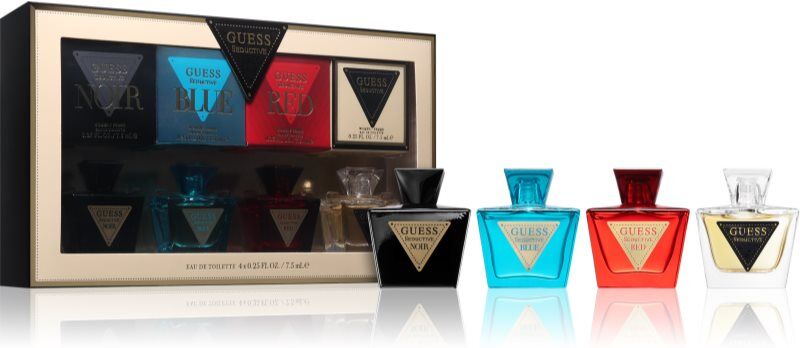
Guess Seductive gift set WGuess Seductive, 4x7.5 ml, Sets for women for Women, Having problems deciding which fragrance suits you best? Never stop discovering hitherto unknown accords and fragrances. The Guess Seductive women’s perfume set offers the perfect opportunity to get to know and try new compositions and to have a slightly different fragrance every day. That’s because the set contains several miniatures that will win you over immediately. Which one will you reach for first? Characteristics: contains fragrance miniatures unique opportunity to test multiple fragrances by a popular brand amazing as a gift gift-wrapped The set contains: Guess Seductive eau de toilette 7,5 ml Guess Seductive Red eau de toilette 7,5 ml Guess Seductive Blue eau de toilette 7,5 ml Guess Seductive Noir eau de toilette 7,5 ml19,20 £*Shipping: 3,99 £Secure redirect to the provider
-
Guess Seductive EDT W 50 mlGuess Seductive, 50 ml, Eaux de Toilette for Women, Seduction is a game – and an irresistible fragrance is your winning hand. Guess Seductive Eau de Toilette will wrap you in a sensuous and sophisticated scent every time you want to shine. floral fragrance fruity fragrance brings out the sensuality in every woman suitable for everyday wear19,20 £*Shipping: 3,99 £Secure redirect to the provider
-
What does the consonantal conjugation mean?
Consonantal conjugation is a grammatical feature found in Semitic languages, where the root of a verb consists of consonants only, and the vowels are added to indicate different tenses, moods, and aspects. This type of conjugation is characterized by changes in the vowels within the root consonants to convey different meanings. Consonantal conjugation allows for a high degree of flexibility and complexity in verb forms, making it a key feature of Semitic language grammar. **
-
What is the conjugation in German?
Conjugation in German refers to changing the form of a verb to match the subject of a sentence. This means adjusting the verb's ending based on the person (I, you, he/she/it, we, you all, they) and tense (present, past, future). German verbs can have different conjugations depending on these factors, making it important to learn the various verb forms to communicate accurately in the language. **
-
Is there a language without conjugation?
Yes, there are languages without conjugation. For example, Chinese is a language that does not have verb conjugation. In Chinese, verbs remain the same regardless of the subject or tense. Instead, time expressions or context are used to indicate when an action took place. **
-
What is the correct conjugation of "s'asseoir"?
The correct conjugation of "s'asseoir" in the present tense is as follows: - Je m'assois - Tu t'assois - Il/elle/on s'assoit - Nous nous asseyons - Vous vous asseyez - Ils/elles s'asseyent **
* All prices are inclusive of VAT and, if applicable, plus shipping costs. The offer information is based on the details provided by the respective shop and is updated through automated processes. Real-time updates do not occur, so deviations can occur in individual cases. ** Note: Parts of this content were created by AI.