Buy porngold.eu ?
We are moving the project
porngold.eu .
Are you interested in purchasing the domain
porngold.eu ?
domain@kv-gmbh.de · 0541-91531010
Buy porngold.eu ?
Why are demonstrative pronouns called demonstrative pronouns?
Demonstrative pronouns are called demonstrative because they demonstrate or point to a specific noun or pronoun in a sentence. They help to indicate the position or location of the noun or pronoun in relation to the speaker or listener. By using demonstrative pronouns such as "this," "that," "these," and "those," speakers can make their communication more precise and clear by specifying which person, place, thing, or idea they are referring to. **
What are demonstrative pronouns and relative pronouns?
Demonstrative pronouns are pronouns that are used to point to specific things or people. Examples of demonstrative pronouns include "this," "that," "these," and "those." Relative pronouns are pronouns that introduce dependent clauses and connect them to independent clauses. Examples of relative pronouns include "who," "whom," "whose," "which," and "that." **


Similar search terms for Pronouns
Top-Angebote
Products related to Pronouns:
-
Oriflame Love Potion Sensual Ruby EDP W 50 mlOriflame Love Potion Sensual Ruby, 50 ml, Eaux de Parfum for Women, Treat your senses to a true gourmand experience. Oriflame Love Potion Sensual Ruby Eau de Parfum for women offers delicious notes that are nearly impossible to resist – especially if you love your sweets. gourmand fragrance floral fragrance brings out the sensuality in every woman suitable for everyday wear luxury fragrance for connoisseurs20,25 £*Shipping: 3,99 £Secure redirect to the provider
-
Touch of Class Passionate Dance Sculpture Silver , SilverWild and intense or slow and steady, a couple's life together can certainly be a Passionate Dance. With an abstract looped design, the silver resin sculpture resembles two people locked together atop a square base. Overall, the sculpture measures 6...79,00 $*Shipping: 15,95 $Secure redirect to the provider




-
With which pronouns do many people confuse reflexive pronouns?
Many people confuse reflexive pronouns with personal pronouns. For example, they may use "myself" or "yourself" instead of "me" or "you" in a sentence. This confusion often occurs when people are trying to emphasize the subject of the sentence, but they mistakenly use a reflexive pronoun instead of a personal pronoun. It's important to understand the difference between reflexive and personal pronouns in order to use them correctly in sentences. **
-
What are pronouns?
Pronouns are words that are used in place of nouns to avoid repetition in a sentence. They can refer to people, places, things, or ideas. Pronouns help make sentences clearer and more concise by replacing specific nouns with general words like "he," "she," "it," "they," and "we." Using pronouns also helps to maintain the flow of writing and make it more engaging for the reader. **
-
What is the difference between personal pronouns and reflexive pronouns?
Personal pronouns are used to refer to people or things, such as "I," "you," "he," "she," "it," "we," and "they." Reflexive pronouns, on the other hand, are used when the subject and object of a sentence are the same person or thing, such as "myself," "yourself," "himself," "herself," "itself," "ourselves," and "themselves." Reflexive pronouns are used to reflect the action back onto the subject, while personal pronouns simply refer to the subject or object. **
-
What is the difference between relative pronouns and interrogative pronouns?
Relative pronouns are used to connect a dependent clause to an independent clause, providing more information about a noun in the independent clause. They include words like "who," "which," and "that." Interrogative pronouns, on the other hand, are used to ask questions and gather information. They include words like "who," "what," "which," "whom," and "whose." The main difference between the two is their function in a sentence - relative pronouns connect clauses, while interrogative pronouns are used to ask questions. **

Which pronouns do many people often confuse with reflexive pronouns?
Many people often confuse reflexive pronouns with intensive pronouns. Intensive pronouns are used to emphasize a preceding noun or pronoun, while reflexive pronouns are used when the subject and object of a sentence are the same. For example, "I myself will do it" uses an intensive pronoun, while "I hurt myself" uses a reflexive pronoun. It is important to understand the distinction between these two types of pronouns to use them correctly in sentences. **
Can you help me with personal pronouns and possessive pronouns?
Certainly! Personal pronouns are used to replace nouns in a sentence, such as "I", "you", "he", "she", "it", "we", and "they". Possessive pronouns show ownership or possession, such as "mine", "yours", "his", "hers", "ours", and "theirs". If you need help understanding how to use these pronouns in a sentence or identifying which pronoun to use in a specific context, feel free to ask for more guidance. **
Top-Angebote
Products related to Pronouns:
-
Montale Sensual Instinct EDP U 50 mlMontale Sensual Instinct, 50 ml, Eaux de Parfum unisex, New day – new opportunity to tackle more challenges. Montale Sensual Instinct unisex Eau de Parfum will refresh your mind so that you can boldly follow your instinct. Embrace your everyday adventures! unique fragrance for a unique personality unisex – suitable for both women and men74,00 £*Shipping: 3,99 £Secure redirect to the provider
-
From You Flowers Flowers - Passionate PeachesA delicious bouquet with hues of pink, peach, and white with pops of green. The Peach Cobbler bouquet features peach roses, pink carnations, pink alstroemeria, and white lisianthus with floral greens. A beautiful and soft arrangement that loved ones...39,99 $*Shipping: 14,99 $Secure redirect to the provider
-
Oriflame Love Potion Sensual Ruby EDP W 50 mlOriflame Love Potion Sensual Ruby, 50 ml, Eaux de Parfum for Women, Treat your senses to a true gourmand experience. Oriflame Love Potion Sensual Ruby Eau de Parfum for women offers delicious notes that are nearly impossible to resist – especially if you love your sweets. gourmand fragrance floral fragrance brings out the sensuality in every woman suitable for everyday wear luxury fragrance for connoisseurs20,25 £*Shipping: 3,99 £Secure redirect to the provider
-
Why are demonstrative pronouns called demonstrative pronouns?
Demonstrative pronouns are called demonstrative because they demonstrate or point to a specific noun or pronoun in a sentence. They help to indicate the position or location of the noun or pronoun in relation to the speaker or listener. By using demonstrative pronouns such as "this," "that," "these," and "those," speakers can make their communication more precise and clear by specifying which person, place, thing, or idea they are referring to. **
-
What are demonstrative pronouns and relative pronouns?
Demonstrative pronouns are pronouns that are used to point to specific things or people. Examples of demonstrative pronouns include "this," "that," "these," and "those." Relative pronouns are pronouns that introduce dependent clauses and connect them to independent clauses. Examples of relative pronouns include "who," "whom," "whose," "which," and "that." **
-
With which pronouns do many people confuse reflexive pronouns?
Many people confuse reflexive pronouns with personal pronouns. For example, they may use "myself" or "yourself" instead of "me" or "you" in a sentence. This confusion often occurs when people are trying to emphasize the subject of the sentence, but they mistakenly use a reflexive pronoun instead of a personal pronoun. It's important to understand the difference between reflexive and personal pronouns in order to use them correctly in sentences. **
-
What are pronouns?
Pronouns are words that are used in place of nouns to avoid repetition in a sentence. They can refer to people, places, things, or ideas. Pronouns help make sentences clearer and more concise by replacing specific nouns with general words like "he," "she," "it," "they," and "we." Using pronouns also helps to maintain the flow of writing and make it more engaging for the reader. **
Similar search terms for Pronouns
-
Touch of Class Passionate Dance Sculpture Silver , SilverWild and intense or slow and steady, a couple's life together can certainly be a Passionate Dance. With an abstract looped design, the silver resin sculpture resembles two people locked together atop a square base. Overall, the sculpture measures 6...79,00 $*Shipping: 15,95 $Secure redirect to the provider
-
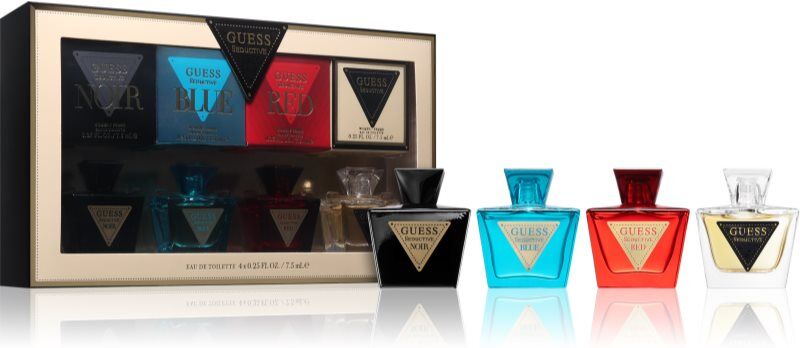
Guess Seductive gift set WGuess Seductive, 4x7.5 ml, Sets for women for Women, Having problems deciding which fragrance suits you best? Never stop discovering hitherto unknown accords and fragrances. The Guess Seductive women’s perfume set offers the perfect opportunity to get to know and try new compositions and to have a slightly different fragrance every day. That’s because the set contains several miniatures that will win you over immediately. Which one will you reach for first? Characteristics: contains fragrance miniatures unique opportunity to test multiple fragrances by a popular brand amazing as a gift gift-wrapped The set contains: Guess Seductive eau de toilette 7,5 ml Guess Seductive Red eau de toilette 7,5 ml Guess Seductive Blue eau de toilette 7,5 ml Guess Seductive Noir eau de toilette 7,5 ml19,71 £*Shipping: 3,99 £Secure redirect to the provider
-
Well Woven Viva Pleasure Abstract Modern Area RugBright, rainbow-colored fun plush rug Velvety soft, 0.4 inch air twist polypropylene pile Power loomed in Turkey Extremely durable and super easy to clean Stain resistant and won't fade in the sunlight over time Vacuum regularly with non-beater bar…79,30 $*Shipping: 0,00 $Secure redirect to the provider
-
What is the difference between personal pronouns and reflexive pronouns?
Personal pronouns are used to refer to people or things, such as "I," "you," "he," "she," "it," "we," and "they." Reflexive pronouns, on the other hand, are used when the subject and object of a sentence are the same person or thing, such as "myself," "yourself," "himself," "herself," "itself," "ourselves," and "themselves." Reflexive pronouns are used to reflect the action back onto the subject, while personal pronouns simply refer to the subject or object. **
-
What is the difference between relative pronouns and interrogative pronouns?
Relative pronouns are used to connect a dependent clause to an independent clause, providing more information about a noun in the independent clause. They include words like "who," "which," and "that." Interrogative pronouns, on the other hand, are used to ask questions and gather information. They include words like "who," "what," "which," "whom," and "whose." The main difference between the two is their function in a sentence - relative pronouns connect clauses, while interrogative pronouns are used to ask questions. **
-
Which pronouns do many people often confuse with reflexive pronouns?
Many people often confuse reflexive pronouns with intensive pronouns. Intensive pronouns are used to emphasize a preceding noun or pronoun, while reflexive pronouns are used when the subject and object of a sentence are the same. For example, "I myself will do it" uses an intensive pronoun, while "I hurt myself" uses a reflexive pronoun. It is important to understand the distinction between these two types of pronouns to use them correctly in sentences. **
-
Can you help me with personal pronouns and possessive pronouns?
Certainly! Personal pronouns are used to replace nouns in a sentence, such as "I", "you", "he", "she", "it", "we", and "they". Possessive pronouns show ownership or possession, such as "mine", "yours", "his", "hers", "ours", and "theirs". If you need help understanding how to use these pronouns in a sentence or identifying which pronoun to use in a specific context, feel free to ask for more guidance. **
* All prices are inclusive of VAT and, if applicable, plus shipping costs. The offer information is based on the details provided by the respective shop and is updated through automated processes. Real-time updates do not occur, so deviations can occur in individual cases. ** Note: Parts of this content were created by AI.